
Dulce de Leche vs Caramel
They’re both golden, sweet and glossy, so it’s easy to think of dulce de leche and caramel as the same thing. They aren’t. They’re made differently, they taste different, and they behave very differently in an oven or a gelato case. If you run a bakery or an ice cream shop, knowing the difference can help you choose the right one for each item, and add a flavor to your menu that your customers don’t find everywhere.
How each one is made
Caramel starts with sugar. You heat it until it melts and browns, then usually add cream and butter to turn it into a sauce. The color and flavor come from caramelization: the sugar itself breaking down under high heat.
Dulce de leche starts with milk. Milk and sugar are cooked slowly for hours until most of the water evaporates and the mix turns thick and golden. The color and flavor come mostly from the Maillard reaction between the milk’s proteins and sugars, the same kind of browning that gives toast and roasted coffee their depth.
How they taste
Caramel tastes of cooked sugar and butter, with a slightly bitter edge when it’s taken dark. Dulce de leche tastes of cooked milk: creamy, round and rich, with toasty and vanilla-like notes. Many customers describe it as “caramel, but creamier.”
How they behave in your kitchen
In the oven
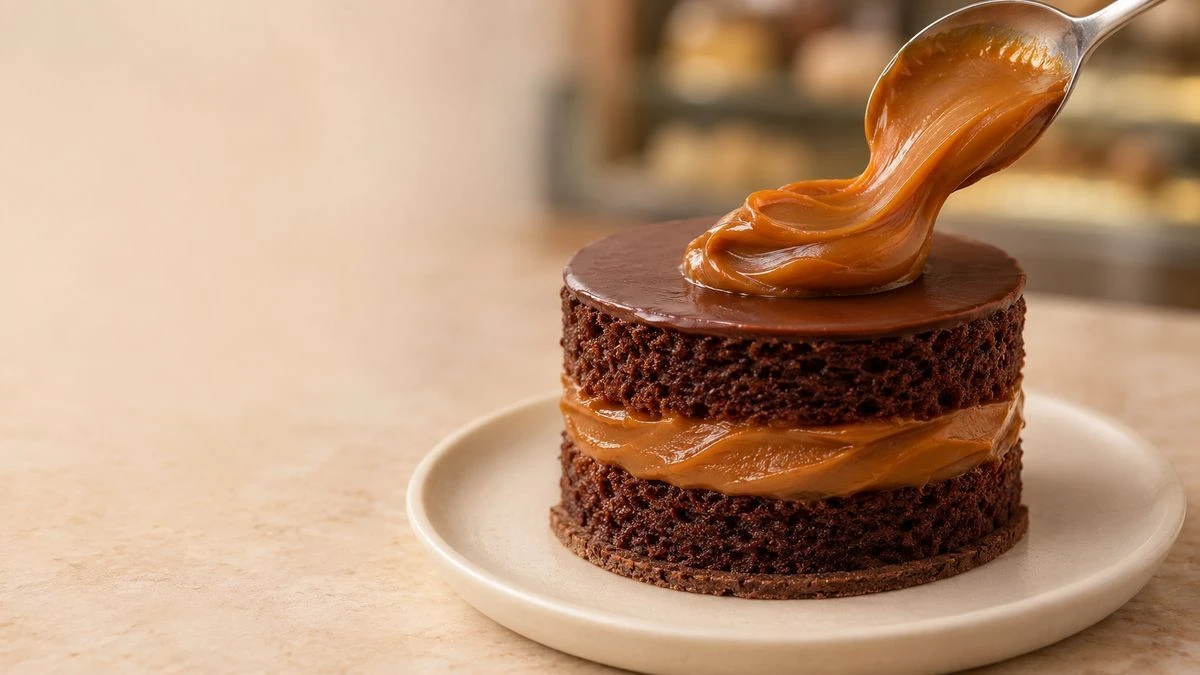
Caramel sauce tends to loosen and run when heated. Bakery-grade dulce de leche (called repostero) is cooked to a thicker, firmer texture, so it holds its shape when piped, layered or baked. That’s why it’s the standard filling for alfajores, croissants and layer cakes in Argentina.
In the freezer
Caramel can set hard when frozen. Ice-cream-grade dulce de leche (called heladero) is made to stay soft at serving temperature, so it ribbons cleanly through ice cream and every scoop gets a soft vein instead of a hard chunk.
On the counter
Dulce de leche is thick and spoonable at room temperature. You can pipe it straight from the bucket, spread it, or warm it slightly for a drizzle.
Quick comparison
| Dulce de leche | Caramel sauce | |
|---|---|---|
| Base | Milk and sugar, slowly reduced | Sugar, usually with cream and butter |
| Flavor | Creamy cooked milk, toasty | Cooked sugar, buttery |
| Texture | Thick and spoonable | Pourable |
| Baking | Repostero holds its shape | Tends to run |
| Freezing | Heladero stays soft | Can set hard |
When to use each
Caramel is great for drizzles, salted caramel flavors and anything you want pourable. Dulce de leche shines anywhere you need a filling that stays put or a swirl that stays soft:
- Fillings for croissants, donuts, churros and alfajores
- Layers in cakes and frosting for cupcakes
- Ribbons through gelato and ice cream
- A dulce de leche gelato flavor of its own
Need ideas? See 10 bakery items that sell better with dulce de leche and how to swirl dulce de leche into gelato.
Why it’s worth adding to your menu
Caramel is on almost every menu. Dulce de leche still isn’t, which makes it an easy way to stand out. You can use it in recipes you already make, name it on the menu as a special, and give customers something new to try and share.
Try it in your kitchen, free
Bakery and ice cream grade dulce de leche in 22 lb buckets. Ships in 24 hours, arrives in 3–5 business days. Eligible US businesses get a free 1 kg sample; you only pay shipping.
FAQ
Can I substitute dulce de leche for caramel in a recipe?
In most fillings and toppings, yes. Use bakery grade for anything that goes in the oven or needs to hold its shape, and ice cream grade for frozen desserts. Dulce de leche is thicker than caramel sauce, so warm it slightly if you need it to pour.
What’s the difference between repostero and heladero?
Repostero (bakery grade) is thick and firm, made to pipe and bake without running. Heladero (ice cream grade) is smoother and stays soft when frozen.
How should I store dulce de leche?
Keep unopened buckets in a cool, dark place. After opening, refrigerate at 35–46 °F (2–8 °C) and keep the lid closed.
Recent Posts
-
Bakery Items with Dulce de Leche
You don’t need new recipes to add something new to your case. Dulce de leche turns items you alread …17th Nov 2026 -
Alfajores Recipe for Bakeries
In Argentina, alfajores are everywhere: by the register in every bakery, café and kiosk. Two tend …17th Nov 2026 -
How To Swirl Dulce de Leche Into Gelato
A tub with thick, glossy dulce de leche ribbons is one of the most eye-catching things you can put …17th Nov 2026